


Specialties
Avian and ExoticsCardiology
Clinical Pathology
Dentistry and Oral Surgery
Dermatology
Emergency & Critical Care
Integrative Medicine
Internal Medicine
Medical Oncology
Neurology
Ophthalmology
Orthopedics
Radiation Oncology
Radioiodine (I-131)
Radiology
Rehabilitation & Pain Management
Surgery
Theriogenology
 Dentistry and Oral Surgery
Schedule a consultation or make a referral to our Dentistry & Oral Surgery Department
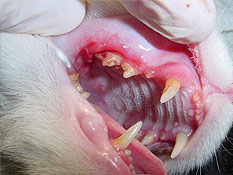
Gum disease (gingivitis and the more severe periodontitis) is the most diagnosed disease in dogs and cats. In fact, by the age of four, 80 percent of dogs and 70 percent of cats will show signs of dental disease.
If left untreated, gum disease not only can cause bad breath, tooth decay, and tooth loss, but once the bacteria gains access to internal organs through diseased gums, more serious health problems like heart, liver and kidney disease may follow.
A growing number of studies suggest that the healthier the mouth, the healthier the pet. That's why seeing your regular veterinarian for routine dental cleanings and check-ups is an important part of good pet care.
Should your dog or cat need more advanced dental care or oral surgery, NorthStar VETS provides a full range of services from specialists in animal dentistry.
The Services We Provide
Our animal dentistry and oral surgery team provides these advanced services:
- Endodontic treatment
- Root canal therapy
- Vital pulp therapy
- Surgical root canal therapy
- Periodontal treatment
- Professional dental cleaning
- Closed and open root planing
- Advanced periodontal surgery
- Crown lengthening procedures for tooth fractures that extend below the gingival margin
- Oral surgery
- Surgical extractions, including full mouth extractions for stomatitis patients
- Minimally invasive jaw fracture repair
- Oral surgical oncology, including oral tumor biopsy, mandibulectomy, maxillectomy
- Repair of cleft palate defects and oronasal fistulas
- Muscle biopsy for suspected masticatory myositis cases
- Prosthodontics
- Full metal crowns for fractured teeth
- Three-quarter crowns for cage-biter's wear
- Radiography (x-rays) and CT scan
- Teleradiology
To make a referral or schedule a consultation with our Dentistry & Oral Surgery Department
Pet Parents: Contact our Dental Department at dentistry@northstarvets.com, or 6092598300 ext 1201.
Veterinarians: Contact Jessica, 609-259-8300 ext 1201, or email, dentistry@northstarvets.com, with questions about in hospital cases, or to discuss a pending case. You can also refer a case online.
Read these case studies to see how our dentistry services made a real difference in the lives of these animals:
- Canine orthodontics (doggie braces)
- Feline stomatitis (full mouth extraction to treat this oral disease)
- K-9 Cop gets tooth repaired (tooth fracture)